
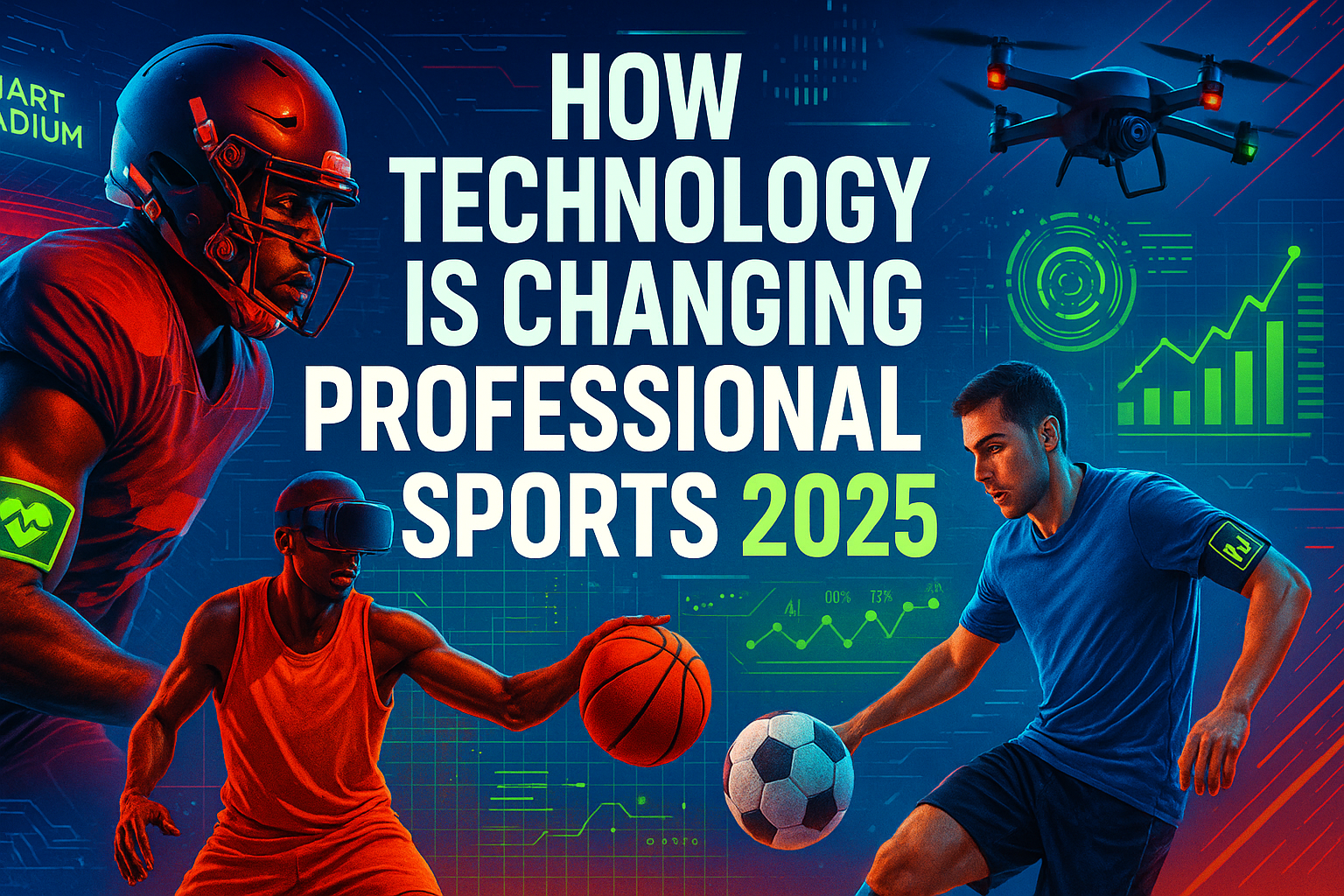
Professional sports have always been about skill, strategy, and athleticism. But in 2025, technology is transforming every aspect of the game—from player performance and training methods to fan engagement, broadcasting, and officiating. Athletes, teams, and fans alike are experiencing the benefits of tech innovations that make sports safer, faster, and more immersive.
This blog explores the ways technology is changing professional sports, the innovations driving this transformation, and what the future holds for players and spectators.
Introduction
Technology has revolutionized sports in ways unimaginable a few decades ago. High-speed cameras, wearable sensors, AI analytics, and virtual reality are now common in training, performance monitoring, and broadcasting.
The evolution isn’t just about improving athletic performance—it’s also about creating better fan experiences, enhancing safety, and making sports more accessible globally. From soccer and basketball to racing and esports, technology is reshaping the sports landscape.
1. Wearable Technology and Performance Tracking
Wearable devices are now integral to training and monitoring athlete performance:
- Smart Watches and Fitness Trackers: Monitor heart rate, distance, speed, and recovery metrics.
- GPS and Motion Sensors: Track player movements for optimal positioning and strategy.
- Biofeedback Devices: Monitor stress, hydration, and fatigue levels.
Impact: Athletes receive real-time data that helps optimize training, reduce injuries, and enhance performance on game day.
2. Artificial Intelligence and Data Analytics
AI is transforming how teams analyze performance and make decisions:
- Predictive Analytics: Forecast player fatigue, injury risk, and match outcomes.
- Game Strategy Optimization: AI analyzes opponents’ patterns to inform tactical decisions.
- Scouting and Recruitment: AI evaluates potential recruits based on performance metrics and potential growth.
Impact: Data-driven decisions give teams a competitive edge and improve efficiency in training and match preparation.
3. Video Technology and VAR
Video technology has changed officiating in professional sports:
- VAR (Video Assistant Referee): Helps referees make accurate decisions in soccer.
- Goal-Line Technology: Determines whether a ball crosses the line in soccer and hockey.
- Instant Replay Systems: Used in basketball, football, and tennis for accurate calls.
Impact: Video tech ensures fair play, accuracy, and transparency, reducing controversial decisions.
4. Virtual Reality and Augmented Reality Training
VR and AR are revolutionizing athlete training and fan experiences:
- Immersive Training Simulations: Athletes practice scenarios in VR for strategy and reaction training.
- AR Performance Feedback: Coaches overlay live stats and guidance on players during training.
- Fan Engagement: AR apps enhance viewing with interactive stats, replays, and live overlays.
Impact: VR and AR create highly effective training environments and engaging, interactive fan experiences.
5. Injury Prevention and Rehabilitation
Medical technology in sports has improved recovery and reduced injuries:
- Wearable Injury Sensors: Detect early signs of strain or stress.
- AI-Powered Rehab Programs: Tailor exercises for faster recovery.
- Cryotherapy and Hyperbaric Chambers: Aid in muscle recovery and injury prevention.
Impact: Advanced medical tech allows athletes to perform longer, recover faster, and reduce the risk of career-ending injuries.
6. eSports and Digital Sports Technology
eSports has emerged as a major professional sport thanks to technology:
- Online Competitions: High-speed internet and streaming platforms enable global tournaments.
- Performance Analytics: Gamers use AI to analyze reaction times, strategy, and gameplay.
- Fan Interaction: Live chats, leaderboards, and virtual rewards enhance engagement.
Impact: Technology has created new professional sports industries and expanded global audiences.
7. Smart Stadiums and Fan Engagement
Technology is transforming the way fans experience live events:
- Smart Ticketing: Digital tickets reduce fraud and streamline entry.
- Mobile Apps: Provide real-time stats, food ordering, and seating guidance.
- AR and VR Experiences: Fans can enjoy immersive replays, 3D views, and interactive stats in real-time.
Impact: Smart stadiums make attending sports events more interactive, convenient, and enjoyable.
8. Biomechanics and Motion Analysis
Advanced sensors and software are used to study athlete movement:
- High-Speed Cameras: Capture detailed motion for technique improvement.
- Motion Capture Technology: Analyzes biomechanics to prevent injuries.
- Force and Pressure Sensors: Optimize weight training and running techniques.
Impact: Biomechanics data improves performance efficiency, reduces injury risk, and maximizes athletic potential.
9. Drones and Aerial Technology
Drones are increasingly used in professional sports:
- Aerial Footage: Capture unique perspectives for broadcasts and training.
- Performance Analysis: Observe player positioning and tactics from above.
- Event Safety: Monitor crowds and ensure safety in large venues.
Impact: Drones provide enhanced visuals, strategic insights, and improved event management.
10. Sustainable and Eco-Friendly Innovations
Sports organizations are adopting green technology:
- Solar-Powered Stadiums: Reduce energy costs and carbon footprint.
- Smart Lighting Systems: Efficient LED lights in stadiums and arenas.
- Sustainable Materials: Eco-friendly sports equipment and apparel.
Impact: Technology supports sustainability while maintaining world-class sports experiences.
Conclusion
Technology is no longer just a supplement in professional sports—it’s integral to every aspect of the game. From wearable performance trackers and AI analytics to VR training, smart stadiums, and sustainable innovations, tech is enhancing athlete performance, fan engagement, and event safety.
By 2025, professional sports will continue to evolve, blending human skill with technological innovation. The future promises smarter training, safer gameplay, immersive fan experiences, and sustainable practices, ensuring that sports remain exciting, fair, and forward-thinking for athletes and audiences alike.
Technology is not replacing the thrill of sports—it’s enhancing it, making every match, game, and competition more engaging, precise, and enjoyable than ever before.
