
Introduction
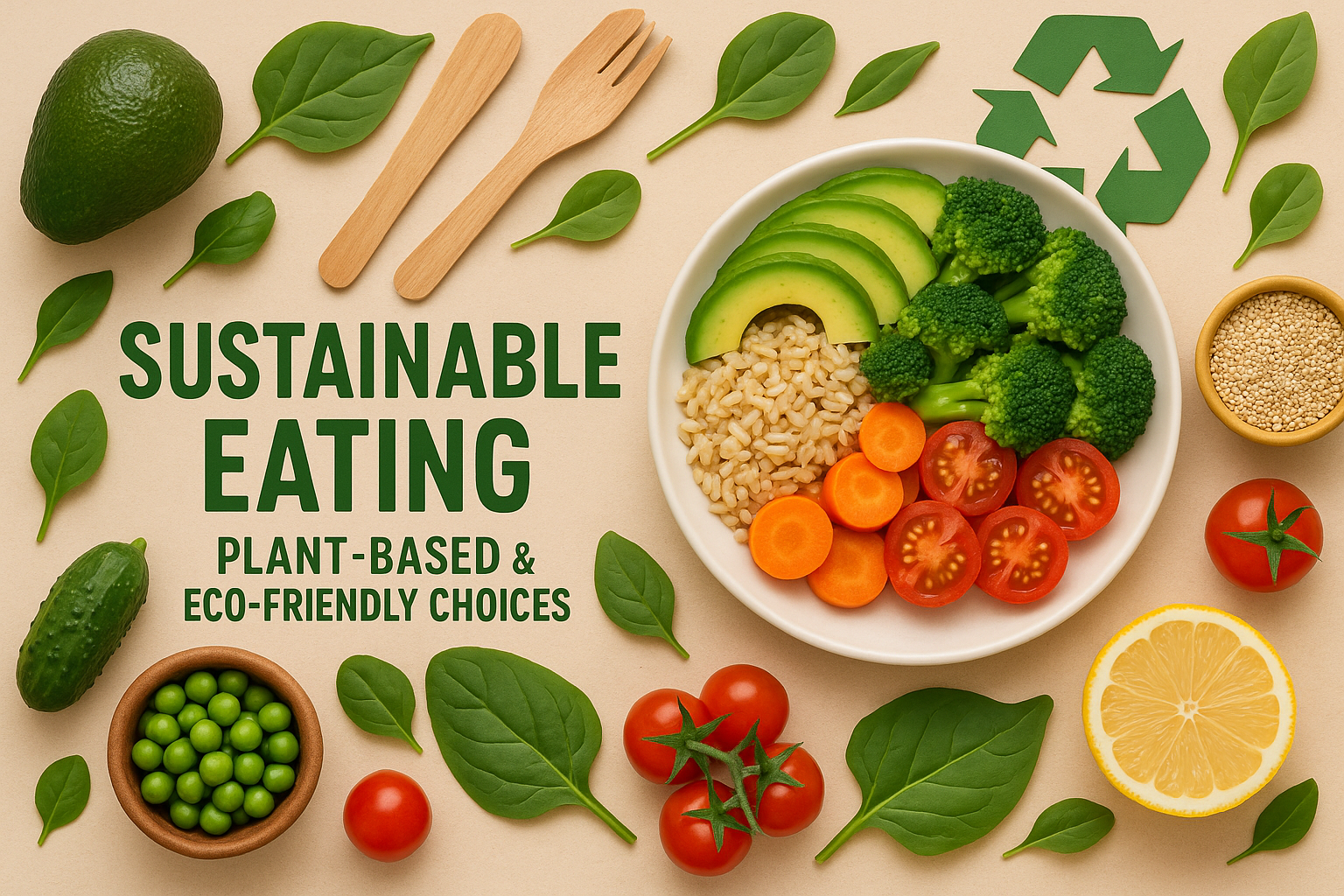
As the world becomes more conscious of environmental challenges like climate change, deforestation, and pollution, sustainable eating has moved from a trend to a necessity. People today are not only thinking about personal health but also the health of the planet. Sustainable eating focuses on making food choices that minimize environmental impact, support local communities, reduce carbon emissions, and promote long-term well-being. One of the biggest pillars of sustainable eating is the shift toward plant-based and eco-friendly diets. Whether you’re fully vegetarian, vegan, or simply looking to reduce your carbon footprint, adopting sustainable eating habits can make a significant difference—for you and the planet.
This blog explores how plant-based diets help the environment, practical eco-friendly food habits, and simple ways to incorporate sustainable choices into your lifestyle without compromising taste or nutrition.
Why Sustainable Eating Matters
Our food choices directly affect the environment. Modern food production contributes to:
- High greenhouse gas emissions
- Deforestation for livestock farming
- Excessive water usage
- Food waste and pollution
- Loss of biodiversity
Choosing sustainable food options helps reduce your impact and supports a healthier planet. It also encourages a food system that is ethical, humane, and future-ready.
1. Understanding Plant-Based Eating
Plant-based eating is not limited to vegan or vegetarian diets—it includes any dietary pattern that emphasizes vegetables, fruits, grains, legumes, nuts, seeds, and plant-based products. Even reducing meat consumption a few times a week can significantly lower environmental impact.
Plant-based foods require fewer resources, generate fewer emissions, and promote better long-term health. Studies show that diets rich in plants are linked to lower risks of heart disease, diabetes, and obesity.
2. Environmental Benefits of Plant-Based Choices
Shifting toward plant-based meals reduces:
- Water consumption: Producing 1 kg of beef requires up to 15,000 liters of water, while plants require much less.
- Carbon footprint: Livestock emissions contribute heavily to greenhouse gases.
- Land use: Animal farming requires large forests to be cleared, impacting ecosystems.
- Pollution: Runoff from animal farms pollutes soil and waterways.
Choosing plant-based foods even a few days a week has a measurable positive impact on the Earth.
3. Eating Local and Seasonal Foods
Local produce supports farmers, reduces transportation emissions, and gives you fresher food with more nutrients. Seasonal produce not only tastes better but is harvested naturally, reducing the need for artificial storage or chemical preservation.
4. Choosing Organic Options When Possible
Organic farming avoids synthetic pesticides and fertilizers, helping preserve soil health and biodiversity. Even choosing a few organic staples—like spinach, apples, or oats—can reduce your exposure to harmful chemicals and support cleaner farming practices.
5. Reducing Food Waste for a Greener Lifestyle
Food waste is one of the biggest environmental problems today. Millions of tons of food are thrown away each year.
To reduce waste:
- Plan meals in advance
- Store food properly
- Use leftovers creatively
- Freeze food before it spoils
- Compost organic waste
Small habits lead to big change.
6. Buying Eco-Friendly and Sustainable Products
Look for labels such as:
- Fair Trade – ensures ethical labor and sustainable production
- Rainforest Alliance Certified
- Non-GMO Project Verified
- Certified Vegan
- Marine Stewardship Council (MSC) for sustainable seafood
These certifications guarantee that your food choices support ethical and eco-friendly practices.
7. Sustainable Protein Alternatives
You don’t need to rely on meat for protein. Eco-friendly alternatives include:
- Lentils
- Chickpeas
- Tofu
- Tempeh
- Beans
- Quinoa
- Nuts and seeds
- Edamame
- Pea protein
These foods are nutritious, affordable, and much lighter on the environment.
8. Growing Your Own Food—Even in Small Spaces
You don’t need a big yard to grow your own produce. Balcony gardens, kitchen herb pots, or small vertical gardens can supply fresh herbs and vegetables. Growing your own food reduces packaging waste, transportation emissions, and gives you fresh, organic produce at home.
9. Eco-Friendly Grocery Habits
Make your shopping routine sustainable by:
- Bringing reusable bags
- Choosing items with minimal packaging
- Buying in bulk
- Supporting zero-waste stores
- Using reusable containers
Mindful shopping reduces waste and supports a cleaner environment.
10. Sustainable Cooking Practices
Eco-friendly eating doesn’t end at the grocery store. How you cook also matters. Try to:
- Use energy-efficient appliances
- Cook in batches
- Reduce water waste
- Use the whole vegetable (peels, stems, leaves)
- Choose reusable utensils and cookware
These habits make your kitchen more sustainable and efficient.
11. The Rise of Plant-Based Alternatives
Today, you can find plant-based versions of almost everything:
- Vegan cheese
- Plant-based meat
- Dairy-free milk (almond, oat, soy)
- Vegan desserts
- Protein powders
These alternatives make transitioning to eco-friendly eating easier and tastier.
12. Eating Mindfully and Intentionally
Mindful eating helps you appreciate your meals, reduce overeating, and make conscious food choices. Slow eating, paying attention to flavors, and understanding where food comes from deepens your connection with sustainable living.
13. Balancing Nutrition with Sustainability
A sustainable diet must also be balanced. Ensure your meals include:
- Protein
- Healthy fats
- Complex carbohydrates
- Vitamins and minerals
Plant-based diets can easily provide complete nutrition with proper planning.
14. Social and Community Impact of Sustainable Eating
Choosing sustainable foods supports local farmers, eco-conscious brands, and fair-trade communities worldwide. Your food decisions help shape a better, cleaner, and more ethical global food system.
15. Simple Sustainable Swaps Anyone Can Make
You can start small with easy swaps like:
- Cow’s milk → oat milk
- Beef → lentils or tofu
- Plastic-packed veggies → loose produce
- Bottled drinks → reusable bottle
- Takeout containers → home-cooked meals
- Refined snacks → nuts and fruits
Little steps create lifelong habits.
Conclusion
Sustainable eating is more than a diet—it’s a lifestyle that benefits your health and the planet. By choosing plant-based meals, reducing waste, supporting local farmers, and making mindful food decisions, anyone can contribute to a greener and healthier future. You don’t need to make drastic changes overnight; even small shifts in your daily routines can create a positive impact. Sustainable eating is about progress, not perfection. Start with simple choices, stay consistent, and inspire others to make eco-friendly food decisions. Together, we can build a food system that nourishes both people and the planet.
