
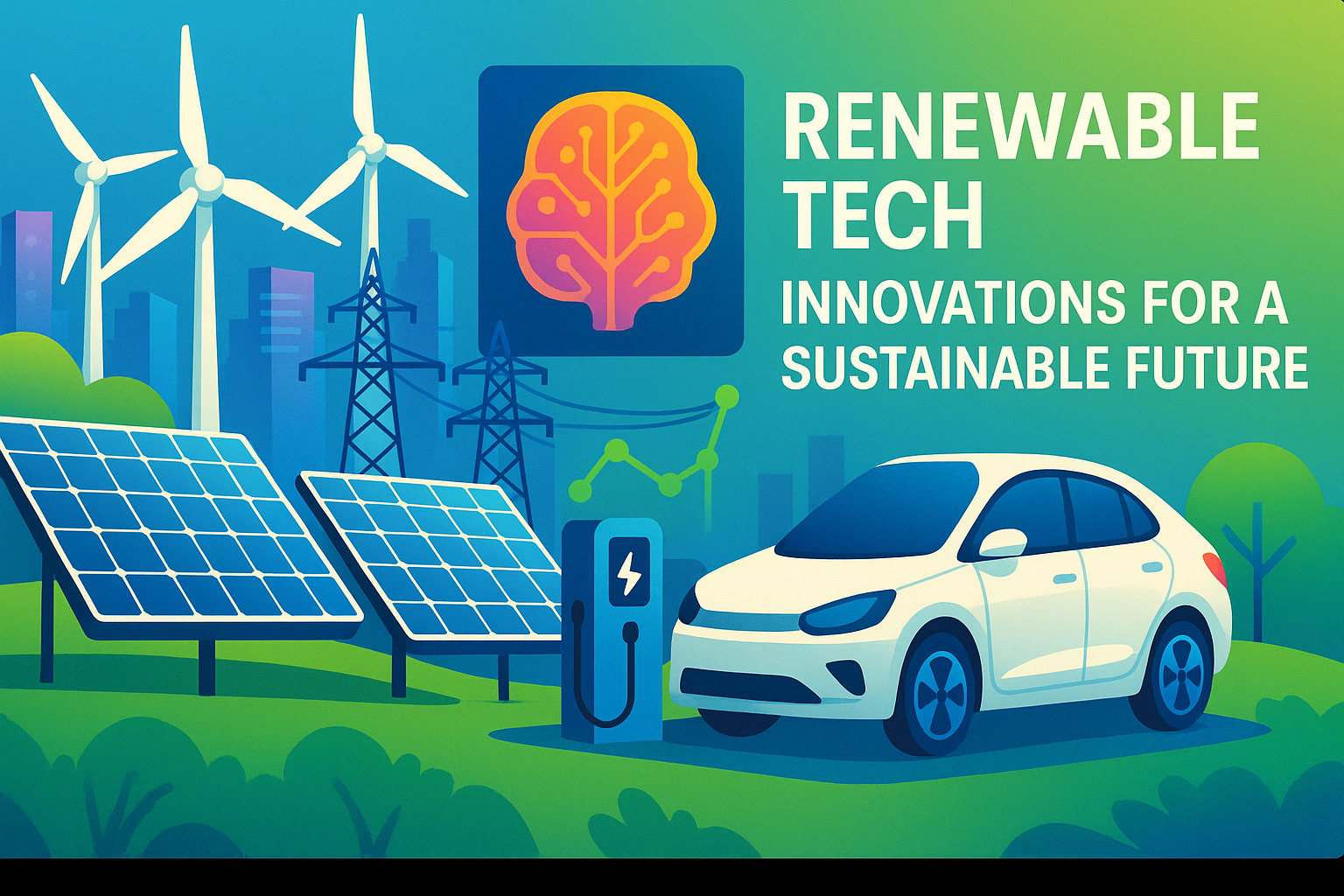
The global push toward sustainability is accelerating rapidly. Renewable technologies are at the forefront of this transformation, reducing carbon footprints, conserving resources, and powering industries with cleaner energy. From solar panels and wind turbines to cutting-edge energy storage and smart grids, renewable tech innovations are reshaping how we generate, store, and consume energy.
By 2025, these technologies are expected to play a crucial role in combating climate change and driving a more resilient, sustainable, and energy-efficient world. This blog explores the latest innovations in renewable tech, their impact on industries and daily life, and what the future holds for sustainable energy solutions.
Introduction
The planet faces unprecedented environmental challenges. Rising global temperatures, pollution, and resource depletion demand urgent solutions. Renewable technologies provide an answer by harnessing natural resources like sunlight, wind, water, and biomass to generate energy while minimizing environmental impact.
Unlike fossil fuels, renewable energy sources are abundant, cleaner, and increasingly cost-effective, making them essential for sustainable development. Advances in technology have enabled higher efficiency, lower costs, and wider accessibility, positioning renewable tech as a cornerstone of the green energy revolution.
1. Solar Power Innovations
Solar energy remains the most widely adopted renewable source, and recent innovations are boosting efficiency and versatility:
- Perovskite Solar Cells: Lightweight, flexible, and capable of higher efficiency than traditional silicon cells.
- Bifacial Panels: Capture sunlight on both sides, increasing energy output.
- Floating Solar Farms: Installations on water bodies reduce land use and improve cooling efficiency.
- Building-Integrated Photovoltaics (BIPV): Solar cells integrated into roofs, windows, and facades for seamless energy generation.
Impact: Solar innovations are making clean energy more affordable, efficient, and adaptable for homes, industries, and utilities.
2. Wind Energy Advancements
Wind energy is another critical pillar of renewable tech, with innovations improving performance and scalability:
- Offshore Wind Farms: Harness stronger and more consistent winds at sea for higher energy output.
- Floating Turbines: Enable wind farms in deeper waters previously inaccessible.
- AI-Optimized Turbines: Use AI and IoT sensors to adjust blade angles and maximize efficiency.
- Noise-Reduction Technologies: Improve community acceptance by minimizing sound pollution.
Impact: Wind innovations enhance reliability, efficiency, and integration with smart energy grids.
3. Energy Storage Solutions
Energy storage is crucial for renewable energy adoption, as it addresses the intermittency of solar and wind power:
- Next-Gen Batteries: Lithium-ion, solid-state, and flow batteries store large amounts of energy efficiently.
- Grid-Scale Storage: Large storage systems stabilize electricity supply and reduce dependence on fossil fuels.
- Hydrogen Storage: Surplus renewable energy converts into green hydrogen for later use.
- Thermal Storage: Stores energy as heat for industrial or domestic use.
Impact: Advanced storage solutions make renewable energy reliable and consistent, enabling 24/7 clean power.
4. Smart Grids and IoT Integration
Smart grids integrate renewable energy with AI, IoT, and advanced monitoring systems:
- Real-Time Energy Management: AI predicts demand, manages supply, and reduces wastage.
- Distributed Energy Resources (DERs): Homes and businesses can generate, store, and share energy locally.
- Predictive Maintenance: Sensors detect grid issues before failures occur, enhancing reliability.
Impact: Smart grids improve efficiency, resilience, and scalability of renewable energy networks.
5. Bioenergy and Waste-to-Energy Technologies
Bioenergy converts organic waste into renewable power:
- Biogas Plants: Produce energy from agricultural, industrial, and municipal waste.
- Algae Biofuels: Sustainable fuel alternatives for transportation and aviation.
- Waste-to-Energy Plants: Convert landfill waste into electricity or heat, reducing pollution.
Impact: Bioenergy transforms waste into a valuable energy resource, supporting circular economy principles.
6. Geothermal Energy Innovations
Geothermal energy harnesses heat from the Earth’s core:
- Enhanced Geothermal Systems (EGS): Expand geothermal access to areas without natural hot springs.
- Hybrid Geothermal Plants: Combine geothermal with solar or biomass for higher efficiency.
- Direct-Use Applications: Provide heating, cooling, and industrial processes sustainably.
Impact: Geothermal technology delivers constant, low-carbon energy with minimal environmental footprint.
7. Electric Mobility and Renewable Integration
Transportation is a major contributor to carbon emissions, and renewables are powering a shift to electric mobility:
- Electric Vehicles (EVs): Increasingly powered by solar, wind, or grid-sourced clean energy.
- Charging Infrastructure: Smart grids and renewable-powered charging stations reduce reliance on fossil fuels.
- Fleet Electrification: Public transport, delivery vehicles, and commercial fleets adopt renewable energy.
Impact: Renewable-powered mobility reduces emissions while promoting sustainable urban development.
8. AI and Data Analytics in Renewable Tech
AI and data analytics are accelerating renewable energy adoption:
- Predictive Maintenance: Identifies issues in turbines, solar panels, and batteries before failures occur.
- Energy Forecasting: Predicts energy generation based on weather, usage patterns, and market trends.
- Optimization Algorithms: Improve efficiency of hybrid renewable systems.
Impact: AI ensures higher performance, lower downtime, and better integration of renewable technologies.
9. Global Adoption and Policy Support
Renewable tech adoption depends on supportive policies and investment:
- Government Incentives: Tax credits, subsidies, and grants encourage renewable adoption.
- International Agreements: Paris Agreement and net-zero commitments drive investment.
- Corporate Initiatives: Companies commit to 100% renewable energy goals for sustainability.
- Community Projects: Microgrids and localized energy solutions empower communities.
Impact: Policy support accelerates global transition to a sustainable energy future.
10. Challenges and the Path Forward
Despite rapid innovation, challenges remain:
- High Initial Costs: Advanced technologies require investment in R&D and infrastructure.
- Intermittency Issues: Solar and wind depend on weather conditions.
- Resource Limitations: Materials like lithium and rare earth metals are needed for batteries.
- Grid Integration: Transitioning from centralized fossil fuel systems to decentralized renewables is complex.
Solutions: Combined advances in storage, AI, policy, and hybrid systems can overcome these hurdles, creating a more resilient and sustainable energy ecosystem.
Conclusion
Renewable technologies are driving a sustainable energy revolution. Innovations in solar, wind, bioenergy, geothermal, storage, and smart grids are reducing carbon emissions, improving efficiency, and making clean energy more accessible than ever.
By 2025, AI and data analytics, coupled with global investment and supportive policies, will enhance the performance, reliability, and adoption of renewable technologies. The transition to renewable energy is not just about reducing environmental impact—it’s about creating a resilient, efficient, and sustainable future for industries, communities, and generations to come.
Renewable tech is the key to a greener planet, and innovations in this sector are shaping a future where clean, sustainable energy powers our world.
Meta Description (SEO-Friendly):
“Explore renewable tech innovations for a sustainable future. Learn how solar, wind, bioenergy, geothermal, and smart grids are transforming energy for 2025 and beyond.
