
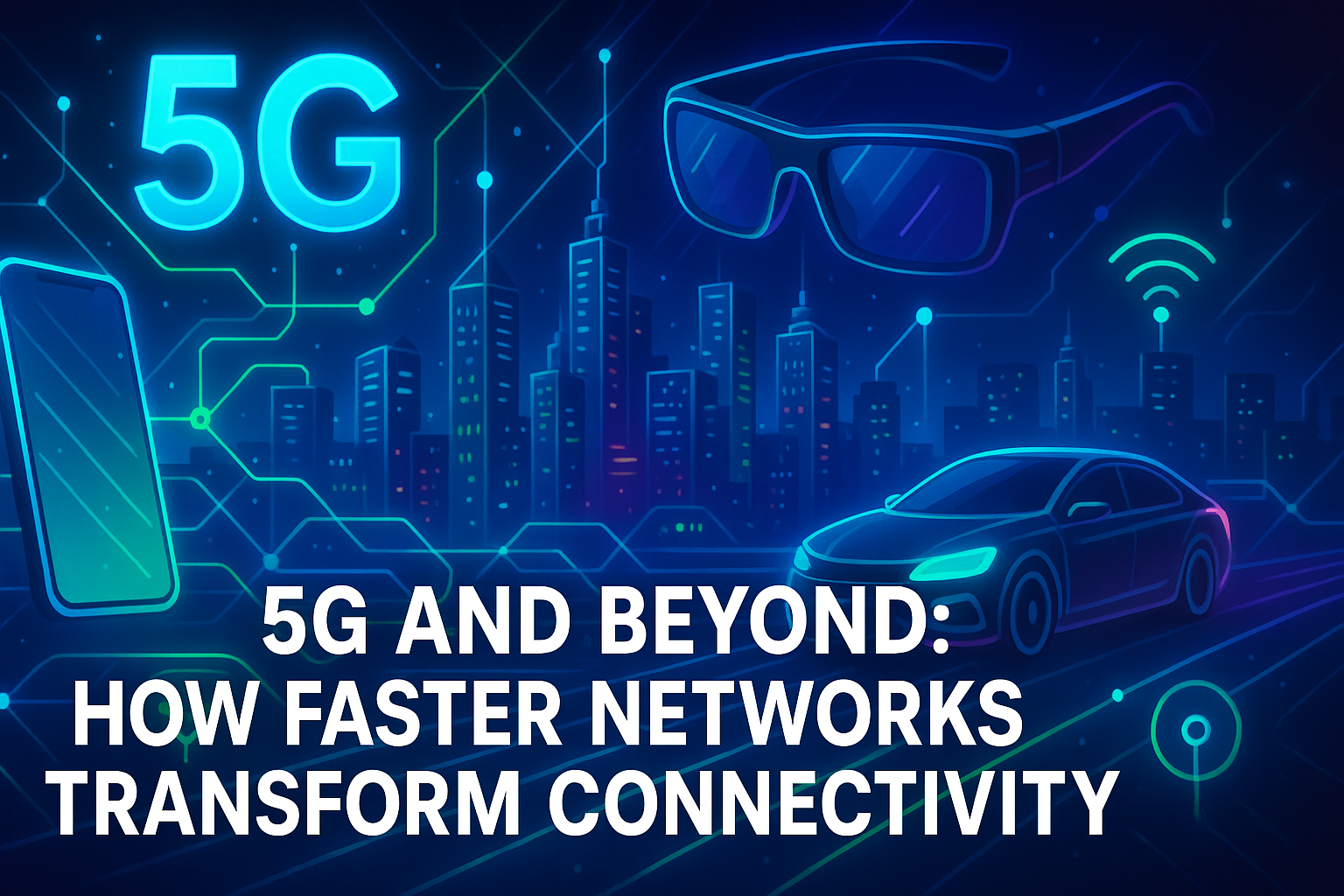
The era of 5G is reshaping the way we live, work, and interact with technology. With ultra-fast speeds, low latency, and massive connectivity, 5G networks are unlocking opportunities for smart cities, autonomous vehicles, remote work, gaming, and healthcare. But the journey doesn’t stop with 5G—research into 6G and beyond promises even faster, more intelligent networks that will transform connectivity on a global scale.
This blog explores the impact of 5G, its applications, the technologies driving it, and the future of network connectivity.
Introduction
The world has moved quickly from 3G to 4G, and now 5G is taking center stage. Unlike previous generations, 5G is not just about faster internet speeds; it’s about enabling an ecosystem where millions of devices can communicate simultaneously with minimal latency and unprecedented reliability.
From remote surgeries to immersive AR experiences, 5G is the backbone of modern innovation. The rollout of 5G worldwide is paving the way for new business models, enhanced user experiences, and smarter infrastructures.
1. What is 5G?
5G, or the fifth generation of mobile networks, is designed to handle:
- High Data Speeds: Download speeds up to 10 Gbps, enabling faster streaming and large data transfers.
- Ultra-Low Latency: Delays as low as 1 millisecond for real-time applications like autonomous driving and gaming.
- Massive Device Connectivity: Supports up to 1 million devices per square kilometer, ideal for IoT ecosystems.
- Network Slicing: Creates dedicated virtual networks for specific applications, such as healthcare or smart cities.
Impact: 5G provides the infrastructure necessary for innovative applications that were previously impractical.
2. Applications of 5G Networks
a) Smart Cities and IoT
- Connected Infrastructure: Traffic lights, energy grids, and utilities can communicate in real-time.
- Public Safety: AI-driven surveillance, emergency response systems, and predictive policing.
- Environmental Monitoring: Sensors track air quality, water levels, and pollution for sustainable city planning.
5G allows cities to become more efficient, responsive, and sustainable, improving quality of life for residents.
b) Autonomous Vehicles
- Vehicle-to-Everything (V2X) Communication: Cars communicate with each other, traffic lights, and roads.
- Low Latency Driving: Real-time updates improve safety and navigation.
- Predictive Maintenance: AI algorithms analyze sensor data to prevent vehicle failures.
Self-driving cars rely on fast, reliable networks to make split-second decisions on the road.
c) Healthcare and Remote Medicine
- Remote Surgeries: Surgeons can operate using robotic instruments over 5G networks.
- Telemedicine: High-quality video consultations with minimal delay.
- Wearable Health Devices: Continuous monitoring of vital signs and remote diagnostics.
Healthcare becomes more accessible, efficient, and accurate with fast and reliable connectivity.
d) Gaming and Entertainment
- Cloud Gaming: Stream high-quality games without local hardware limitations.
- Augmented and Virtual Reality: Real-time AR/VR experiences for education, training, and entertainment.
- Immersive Media: 8K streaming and interactive content with near-zero buffering.
Gamers and content creators benefit from uninterrupted, high-speed connectivity.
3. Technology Behind 5G
a) Millimeter Waves
- Higher frequency spectrum (30–300 GHz) enables faster speeds.
- Shorter range requires dense deployment of small cells.
b) Massive MIMO
- Multiple antennas increase network capacity.
- Improves signal quality and coverage in high-density areas.
c) Network Slicing
- Creates virtual networks for specific applications.
- Ensures reliability and performance for critical services like healthcare or emergency response.
d) Edge Computing
- Processes data closer to devices to reduce latency.
- Enhances AI applications and real-time analytics.
These technologies work together to make 5G faster, smarter, and more reliable than previous generations.
4. Challenges in 5G Adoption
Despite its advantages, 5G faces several hurdles:
- Infrastructure Costs: Deploying small cells and towers is expensive.
- Spectrum Allocation: High-frequency bands require careful regulation.
- Device Compatibility: Older devices may not support 5G.
- Security Risks: More connected devices mean higher vulnerability to cyberattacks.
Addressing these challenges ensures successful and secure 5G adoption worldwide.
5. 6G and the Future of Connectivity
Researchers are already looking beyond 5G to 6G networks, expected to launch around 2030:
- Speeds Up to 1 Tbps: Enabling massive data transfer in seconds.
- Sub-Millisecond Latency: Real-time interactions in holographic communication and remote operations.
- AI-Integrated Networks: Self-optimizing and predictive networks for intelligent data routing.
- Satellite Integration: Global connectivity, even in remote areas.
6G promises to further revolutionize industries, from space exploration to immersive media, IoT ecosystems, and AI-powered infrastructure.
6. Impact on Businesses and Industries
a) Manufacturing and Industry 4.0
- Real-time machine monitoring and predictive maintenance.
- Autonomous robots and assembly lines connected via 5G.
- Efficient logistics with AI-powered analytics.
b) Agriculture
- Smart sensors for soil, water, and crop monitoring.
- Autonomous farming equipment guided by AI and connected networks.
- Improved yield prediction and resource management.
c) Retail
- Personalized AR shopping experiences.
- Real-time inventory management and supply chain optimization.
- Seamless IoT-enabled customer service.
Impact: 5G enables smarter, faster, and more connected business operations across sectors.
7. Social and Cultural Impacts
- Remote Work and Collaboration: Seamless video conferencing, VR meetings, and cloud-based workspaces.
- Education: Real-time AR/VR classrooms and remote labs.
- Entertainment: Live interactive events, virtual concerts, and global streaming.
5G is bridging the digital divide, enhancing connectivity, and expanding access to education, work, and culture.
8. Security and Privacy Considerations
With more connected devices, security and privacy are critical:
- Encryption and Authentication: Protect sensitive data from cyberattacks.
- IoT Device Security: Safeguard smart home and industrial devices.
- Regulatory Compliance: Adherence to data protection laws like GDPR.
Secure 5G networks are essential to maintain trust and reliability in connected systems.
9. Global Adoption and Infrastructure
5G rollout varies across countries:
- Asia-Pacific: Leading in 5G coverage and deployment, particularly in China and South Korea.
- North America: Rapid urban deployment, focusing on smart cities and enterprise adoption.
- Europe: Emphasis on regulatory compliance, industrial applications, and cross-border connectivity.
- Developing Regions: Satellite-based 5G solutions are expanding connectivity in remote areas.
Global adoption ensures that benefits of 5G reach a wider population, enabling a more connected world.
10. Conclusion
5G is more than just a faster network—it is a transformative technology that is redefining connectivity, communication, and innovation. By 2025, industries like healthcare, gaming, transportation, and smart cities are being revolutionized by high-speed, low-latency, and massive device connectivity.
Looking ahead, 6G and beyond promise even faster, more intelligent, and globally accessible networks, enabling innovations that were previously science fiction. From remote surgeries to autonomous cities and immersive experiences, faster networks are laying the foundation for a more connected, efficient, and intelligent world.
The future of connectivity is here, and it’s not just about speed—it’s about possibility, innovation, and transformation.
