
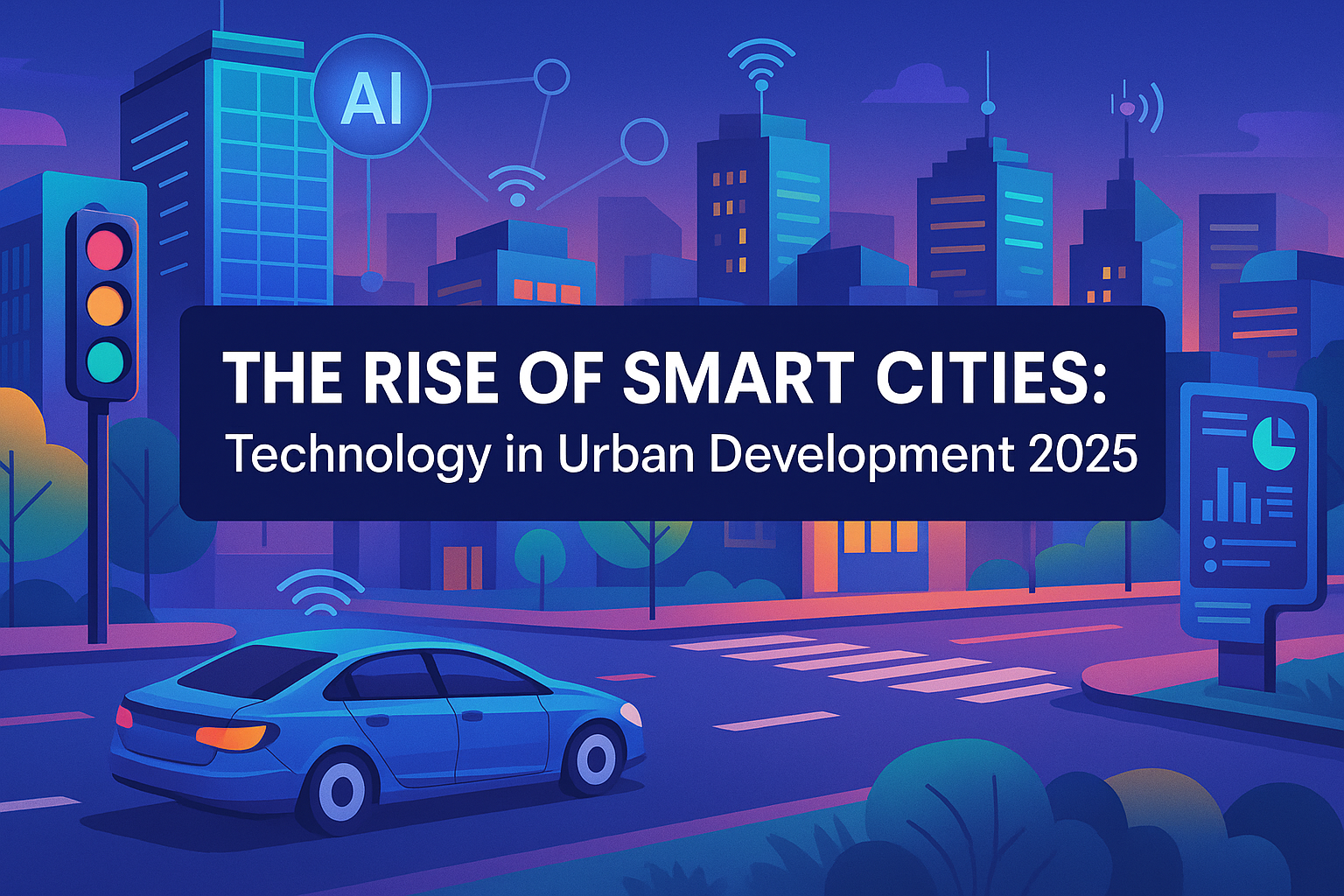
Urban areas are growing at an unprecedented rate, and cities around the world are facing challenges related to traffic congestion, pollution, energy management, and public services. Enter smart cities—urban spaces where technology, data, and innovation converge to improve the quality of life for residents. By 2025, smart cities are no longer futuristic concepts; they are actively shaping how we live, work, and move.
This blog explores the rise of smart cities, the technologies driving urban development, and the benefits and challenges of building connected, intelligent urban environments.
Introduction
The 21st century is marked by rapid urbanization. According to the United Nations, over 68% of the world’s population will live in cities by 2050. To accommodate this growth sustainably, cities need to adopt technologies that enhance infrastructure, efficiency, and livability.
Smart cities leverage Internet of Things (IoT) devices, artificial intelligence (AI), big data, and renewable energy to manage traffic, optimize energy use, and improve public services. These technologies create connected urban ecosystems that respond dynamically to the needs of residents.
1. What is a Smart City?
A smart city integrates technology into urban planning to improve efficiency, sustainability, and quality of life. Core components include:
- IoT Sensors: Collect data on traffic, air quality, energy usage, and public safety.
- Data Analytics Platforms: Analyze collected data to optimize city operations.
- Smart Infrastructure: Intelligent streetlights, traffic signals, and waste management systems.
- Citizen Engagement: Mobile apps and platforms for residents to report issues and access services.
Smart cities aim to create urban environments that are sustainable, efficient, and responsive, making city life more convenient, safe, and environmentally friendly.
2. AI and Data Analytics in Urban Planning
AI and data analytics are the backbone of smart city development:
- Predictive Traffic Management: AI analyzes traffic patterns to reduce congestion and optimize routes.
- Energy Management: Smart grids use AI to balance supply and demand, reducing energy waste.
- Resource Allocation: Data-driven insights help city authorities allocate resources effectively, from emergency services to public transportation.
- Urban Planning: AI simulations assist in designing sustainable neighborhoods and infrastructure projects.
By harnessing AI, cities can anticipate problems before they occur and deliver proactive solutions for residents.
3. Internet of Things (IoT) in Smart Cities
IoT devices are critical for real-time monitoring and automation:
- Smart Traffic Signals: Adjust in real-time based on traffic flow.
- Environmental Sensors: Monitor air quality, noise pollution, and water levels.
- Smart Waste Management: Sensors alert authorities when bins are full, optimizing collection routes.
- Connected Public Services: Streetlights, parking systems, and energy meters can be remotely managed.
IoT creates a network of connected devices that provide actionable insights for better decision-making.
4. Sustainable Energy and Smart Grids
Sustainable energy solutions are central to smart city development:
- Renewable Energy Integration: Solar, wind, and hydroelectric systems are connected to smart grids.
- Energy Storage Solutions: Batteries and supercapacitors store excess energy for peak demand.
- AI-Powered Grid Management: Optimizes energy distribution, reduces blackouts, and minimizes carbon footprint.
Impact: Residents benefit from reliable, clean, and cost-effective energy, supporting environmental sustainability goals.
5. Transportation and Mobility Solutions
Smart cities are transforming urban mobility through AI, IoT, and automation:
- Autonomous Vehicles: Self-driving cars reduce congestion and accidents.
- Smart Public Transit: AI optimizes bus and train schedules in real-time.
- Shared Mobility Services: Ride-sharing and e-scooters are integrated with city apps for easy access.
- Traffic Analytics: Predictive models help prevent bottlenecks and improve road safety.
Impact on Daily Life: Faster commutes, reduced pollution, and improved accessibility for residents.
6. Smart Healthcare in Urban Environments
Healthcare services in smart cities are becoming more efficient, accessible, and personalized:
- Telemedicine Integration: IoT devices monitor patient health remotely.
- AI Diagnostics: AI algorithms analyze medical data for early disease detection.
- Resource Management: Hospitals use predictive analytics to optimize staff schedules and patient flow.
Residents benefit from faster access to care, early intervention, and improved overall health outcomes.
7. Public Safety and Security
AI and smart sensors enhance urban safety:
- Surveillance Systems: AI analyzes video feeds to detect unusual behavior or potential threats.
- Disaster Management: Sensors monitor environmental risks like floods or earthquakes.
- Emergency Response: AI-powered systems prioritize and dispatch first responders efficiently.
Impact: Safer neighborhoods and quicker, more coordinated responses to emergencies.
8. Citizen Engagement and Digital Governance
Smart cities emphasize citizen participation and transparency:
- Mobile Apps: Residents can report issues, pay bills, or access city services easily.
- Data Transparency: Open data platforms allow citizens to understand and influence city planning.
- Feedback Loops: AI analyzes citizen input to improve urban services continuously.
Engaged residents contribute to a more inclusive and responsive urban environment.
9. Challenges in Building Smart Cities
While smart cities offer many benefits, several challenges exist:
- High Initial Costs: Implementing IoT, AI, and smart infrastructure requires significant investment.
- Data Privacy and Security: Collecting vast amounts of data raises privacy concerns.
- Integration Complexity: Existing urban systems may be difficult to integrate with new technology.
- Digital Divide: Not all residents may have equal access to technology.
Addressing these challenges is essential for equitable and sustainable smart city development.
10. The Future of Smart Cities
By 2025, smart cities are expected to evolve in several key ways:
- Hyper-Connected Urban Environments: Seamless integration of transport, energy, healthcare, and public services.
- AI-Driven Urban Planning: Real-time simulations guide city expansions and infrastructure investments.
- Sustainable and Resilient Cities: Renewable energy and predictive maintenance reduce environmental impact.
- Citizen-Centric Design: Urban development focused on convenience, accessibility, and well-being.
Smart cities are shaping the next generation of urban life, making cities more intelligent, sustainable, and livable.
Conclusion
The rise of smart cities represents a major shift in urban development, where technology, data, and citizen engagement converge to create sustainable, efficient, and connected environments. From traffic management and energy efficiency to healthcare and public safety, smart cities are transforming the way we live, work, and interact with urban spaces.
By embracing AI, IoT, and renewable technologies, cities can improve residents’ quality of life while tackling challenges like congestion, pollution, and resource management. In 2025 and beyond, the smart city movement promises smarter, safer, and more sustainable urban living for people around the world.
